Lekki Bunker Terminal and What It Means for West Africa

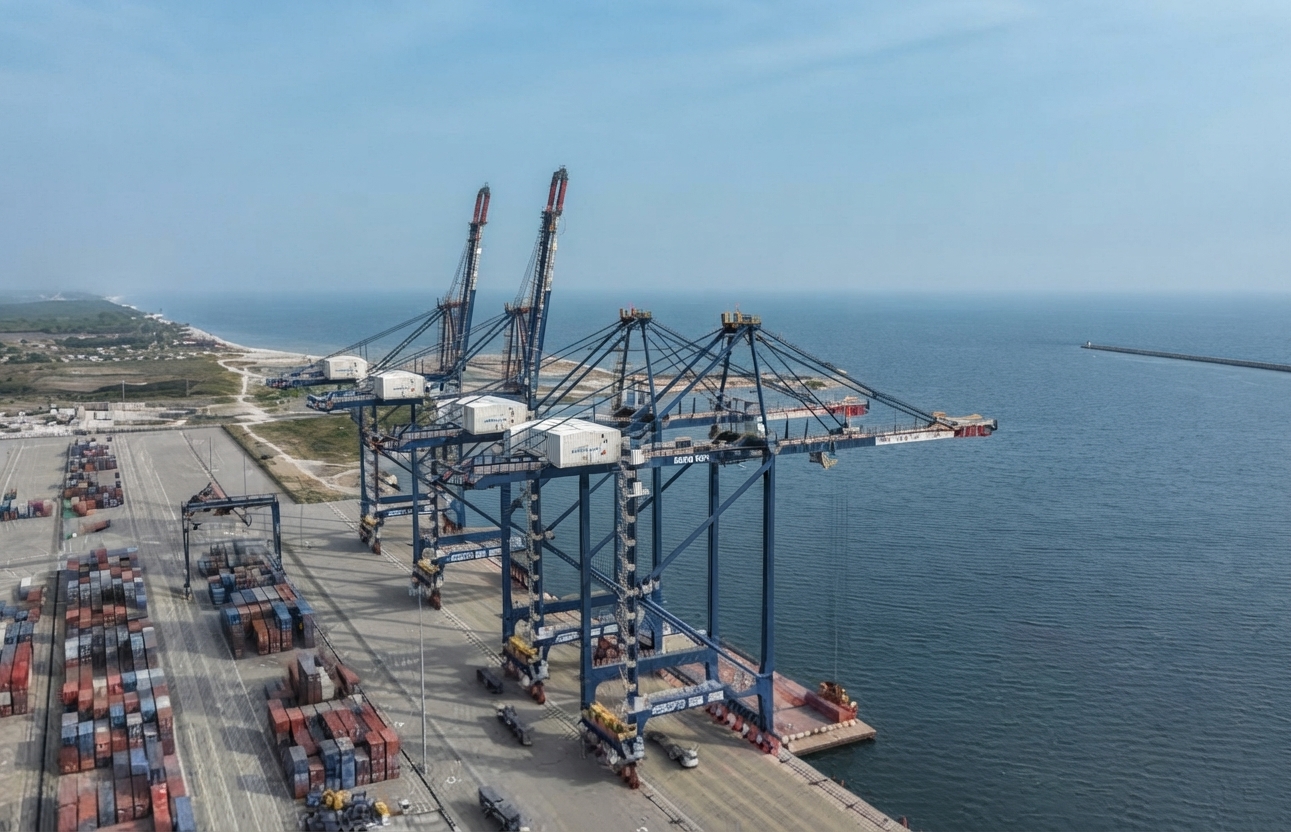
Nigeria’s downstream petroleum sector has seen significant investment in recent years, but few developments carry as much strategic weight for the marine fuel industry as the Lekki Bunker Terminal. Currently under construction at the Lekki Free Zone Sea Port, this facility is set to become the first of its kind in West Africa, and its completion will reshape how marine fuel is supplied across one of the world’s fastest-growing bunkering regions.
This article explains what the Lekki Bunker Terminal is, why its location matters, and what it means for vessel operators, bunker suppliers, and the broader West African maritime economy.
What Is the Lekki Free Zone and Why Does It Matter?
The Lekki Free Zone is a 16,000-hectare economic development zone along the eastern corridor of Lagos State, operated by the Lekki Free Zone Development Company (LFZDC), a joint venture between China-Africa Lekki Investment Ltd and the Lagos State Government. LFZDC is licensed to operate as a multi-faceted free zone company with core businesses spanning manufacturing, oil and gas storage, commercial logistics, and related industries.
The zone is directly integrated with the Lekki Deep Sea Port, Nigeria’s first and only currently operating deep sea port, which started full commercial operations in April 2023. The port includes a liquid cargo terminal capable of handling vessels up to 45,000 DWT, with expansion potential to 160,000 DWT. This infrastructure underpins the commercial case for a dedicated bunker terminal within the zone.
Downstream operators across Nigeria’s petroleum sector have been diverting investment toward the Lekki Free Zone, attracted by its proximity to the deep-sea port, the zone’s regulatory benefits, and its position as an alternative to the congested Apapa corridor in Lagos.
The Lekki Bunker Terminal: What Is Being Built
Stratos Trading is developing a 25,000MT bunker terminal within the Lekki Free Zone Sea Port. At planned capacity, this will be the largest dedicated bunker terminal at this location and the first purpose-built bunker terminal of this scale in West Africa.
The terminal will support compliant storage and distribution of VLSFO, LSMGO, and other marine fuel grades required by vessels operating in Nigerian and West African waters. Its position within the Lekki Free Zone provides regulatory benefits, port integration, and access to the deep-sea port’s vessel traffic without the logistical constraints that have historically limited bunkering operations in the Apapa area.
For Stratos Trading, the terminal represents a significant forward investment in the West African bunkering market — a commitment made based on a clear view that demand in this region is structural, not cyclical.
Why Location Is the Terminal’s Greatest Asset
The Lekki Free Zone’s position on the Lagos coastline places it at the intersection of Nigeria’s largest maritime market and the emerging infrastructure of the Lekki Deep Sea Port corridor. Lekki Free Zone is described by its operators as an indispensable part of the Lagos Metropolis blueprint, with a vision to build an offshore economic growth zone that minimises capital flight and establishes Nigeria as a global business hub.
For marine fuel, location means access to vessel traffic. The Lekki Deep Sea Port handles container, liquid, and bulk cargo across three terminals. As port throughput grows, so does the population of vessels requiring bunker services in its vicinity. A dedicated bunker terminal integrated with this port infrastructure removes the logistical friction of offshore barge positioning and provides a more controlled, efficient, and documentable supply chain for every stem.
The Lekki corridor also benefits from the Nigerian government’s designation of the zone as a special economic area, which provides fiscal incentives and regulatory facilitation that reduce the operating cost of terminal infrastructure for compliant operators.
What It Means for West Africa’s Bunkering Market
West Africa has greatly benefited from the diversion of shipping traffic, with the reshaping of global routes via the Cape of Good Hope transforming areas of the region into strategic bunkering hubs. This structural shift in global trade flows means that West African bunkering infrastructure is no longer serving only local demand. It is serving global demand from vessels that have permanently extended their West Africa port calls.
The Lekki Bunker Terminal arrives at exactly this moment. As the region’s vessel traffic grows and global suppliers accelerate their own West Africa expansion programmes, a new purpose-built terminal with 25,000MT capacity adds meaningful supply-side relief to a market where demand has been consistently outpacing available infrastructure.
For vessel operators, additional terminal capacity in Lagos means more predictable supply availability, more competitive pricing conditions as supply constraints ease, and a wider choice of credible physical suppliers. For the region as a whole, it signals that Nigeria is not simply participating in West Africa’s bunkering growth; it is actively leading it.
What Operators Should Know Now
The terminal is currently under construction. In the interim, Stratos Trading’s bunkering operations across Lagos, Bonny, Escravos, Onne, and Sanbarh continue to serve vessel operators across Nigerian maritime zones using our owned barge fleet and dedicated storage at Greenmac Energy Terminal in Koko, Delta State.
The completion of the Lekki Bunker Terminal will extend our Lagos supply capability significantly and allow us to serve a larger volume of vessel calls with greater consistency. Operators who establish a supply relationship with Stratos Trading now will be well positioned to benefit from that expanded capacity as it comes online.
For more context on Nigeria’s downstream sector and the broader market forces shaping West Africa’s bunkering landscape, read our article on bunkering services in West Africa and our piece on global forces shaping the bunker fuel market in 2026. Get in touch to discuss your supply requirements.